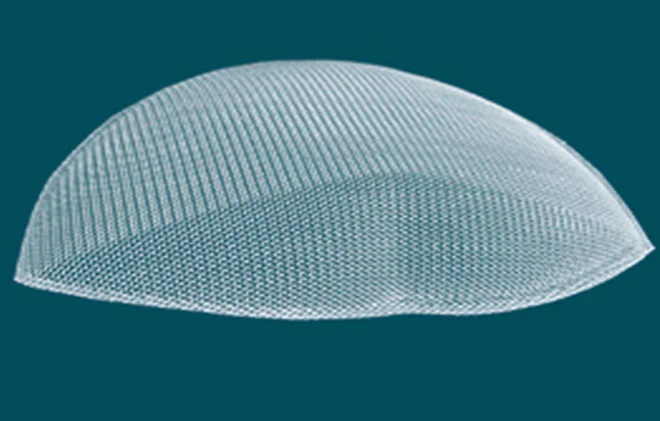
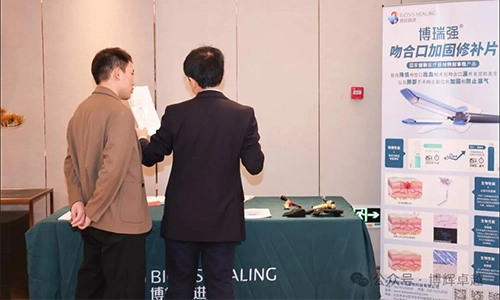
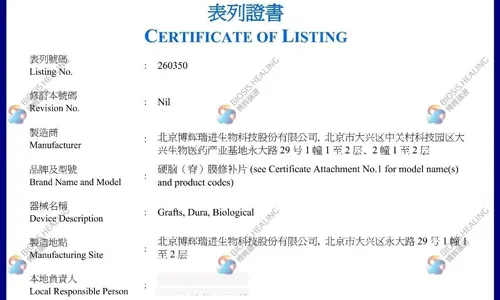
In the field of neurosurgery, the emergence of Dural Repair Patches is undoubtedly a revolution. The integrity of the hard meningeal, as the protective shell of the brain, is vital for the normal functioning of the brain. However, due to various reasons such as trauma, surgery, etc., the hard meningeal may rupture or be defective, requiring the use of a Dural Repair Patch for repair.
The Dural Repair Patch is a material with excellent biocompatibility that can perfectly integrate with the human hard meningeal, thus achieving the repair of the hard meningeal. The emergence of this patch brings new hope to neurosurgery, providing new treatment methods for previously untreatable conditions such as cerebrospinal fluid leakage.
Advantages of Dural Repair Patch
The advantage of Dural Repair Patches lies in their excellent biocompatibility, allowing them to perfectly integrate with the human hard meningeal, thus achieving the repair of the hard meningeal. The emergence of this patch brings new hope to neurosurgery, providing new treatment methods for previously untreatable conditions such as cerebrospinal fluid leakage.
In addition, the use of Dural Repair Patches also greatly reduces the complexity and risks of surgery. In the past, the repair of the hard meningeal required the transplantation of autologous tissue or the use of artificial materials, both of which had their limitations and risks. The emergence of Dural Repair Patches makes the surgery simpler and safer.
Video of Biosis Healing's Dural Repair Patch
Key Materials Used in Dural Repair Patch Manufacturing
The material of a dural repair patch plays an important role in its clinical performance, handling properties, and tissue compatibility. In neurosurgery, commonly used dura patch materials include biological matrix materials, collagen-based materials, synthetic polymers, and autologous tissue grafts. Each material type has different characteristics in terms of flexibility, absorption, tissue integration, and long-term response.
Biological materials are widely valued because they can provide a natural matrix structure for tissue repair. For example, SIS, also known as small intestinal submucosa, is a biological extracellular matrix material that can support tissue remodeling while gradually degrading and being absorbed by the body. This makes it a suitable material option for dura mater repair applications where biocompatibility and natural healing support are important.
Compared with some non-absorbable synthetic materials, an absorbable biological dura patch material may reduce the need for permanent foreign material at the repair site. It can also provide good conformability, allowing surgeons to trim and place the patch according to the size and shape of the dural defect. For cranial and spinal dura repair, material selection should consider surgical site requirements, defect size, handling convenience, and the need for secure dural closure.
How Dural Repair Patch Helps Reduce CSF Leakage Risk
CSF leakage is one of the important concerns in dura repair surgery. When the dura mater is damaged or not fully closed, cerebrospinal fluid may leak from the repair site. A dural repair patch helps reinforce the defect area, support secure dural closure, and reduce the risk of postoperative leakage.
CSF Leakage Risk Factor
How Dural Repair Patch Helps
Dural defect after surgery
Covers the damaged dura mater area and provides additional repair support
Incomplete dural closure
Reinforces the closure site and improves the integrity of the dura mater
Tissue tension around the repair site
Provides flexible coverage that adapts to cranial or spinal dura structures
Risk of postoperative fluid leakage
Helps create an additional barrier to reduce CSF leakage risk
Need for stable healing support
Offers biocompatible material support for tissue repair and remodeling
A well-designed dura repair patch should provide good flexibility, stable coverage, and strong tissue compatibility. These features help surgeons achieve a more secure repair in cranial and spinal neurosurgical procedures.
Prospects of Dural Repair Patch Application
The emergence of Dural Repair Patches has not only brought new treatment methods to neurosurgery but also brought new hope to patients. With the advancement of technology, the application prospects of Dural Repair Patches will be even broader. Firstly, Dural Repair Patches can be used for the treatment of more conditions. In addition to cerebrospinal fluid leakage, Dural Repair Patches can be used to treat various hard meningeal diseases such as meningitis and hard meningeal tumors.
Secondly, the use of Dural Repair Patches can further reduce the complexity and risks of surgery. With further research and improvement of Dural Repair Patches, we have reasons to believe that future neurosurgical procedures will be simpler, safer, and more effective.
In summary, the emergence of Dural Repair Patches undoubtedly brings revolutionary changes to neurosurgery. Its advantages and application prospects fill us with anticipation for the future of neurosurgical treatment.
At Biosis Healing, we are committed to providing advanced biosis products including dural repair patches. Contact us today to discuss your needs and let us assist you in implementing effective solutions for your projects and harnessing the power of biology.
FAQ About Dural Repair Patch
What is a dural repair patch used for?
A dural repair patch is used to repair or reinforce defects in the dura mater during neurosurgical procedures. It helps restore the protective membrane around the brain and spinal cord and supports secure dural closure.
What is a dura patch made of?
A dura patch can be made from different materials, including collagen, synthetic polymers, autologous tissue, or biological extracellular matrix materials such as SIS. The material choice depends on surgical needs, biocompatibility, handling performance, and absorption requirements.
Can a dural repair patch help prevent CSF leakage?
Yes. A dural repair patch can help reinforce the dural repair site and provide additional coverage over the defect. This may help reduce the risk of cerebrospinal fluid leakage after cranial or spinal surgery.
Is a dural repair patch used in spinal surgery?
Yes. Dural repair patches can be used in both cranial and spinal dura repair. In spinal surgery, they may be applied when the dura mater is damaged or when additional reinforcement is needed for closure.
Why is biocompatibility important for a dural repair patch?
Biocompatibility is important because the patch comes into contact with sensitive tissues around the brain or spinal cord. A biocompatible dura substitute helps reduce irritation and supports safer tissue repair.
How should surgeons choose a suitable dural repair patch?
Surgeons usually consider the patch material, absorption behavior, flexibility, available sizes, ease of trimming, tissue compatibility, and suitability for cranial or spinal dura repair. The final selection should depend on the surgical site and clinical requirements.
Biosis Healing's SIS Material Products You May Also Like:
A Glimpse of the Grand Event: Witnessing Excellence TogetherThe 31st South China International Dental Expo concluded successfully in Guangzhou on March 6th, 2026. As a highly influential dental indust...
1-2F Building 2, 1-2F Building 1, No. 29 Yongda Road, Daxing Bio-medicine Industry Base, Zhongguancun Science Park, Daxing District, 102600, Beijing, China
1-2F Building 2, 1-2F Building 1, No. 29 Yongda Road, Daxing Bio-medicine Industry Base, Zhongguancun Science Park, Daxing District, 102600, Beijing, China

 English
 français
 Deutsch
 Español
 português
 русский
 tiếng việt
 العربية
 ไทย
ไทย Indonesia